

Many parents come to counseling feeling confused about their child’s behavior.
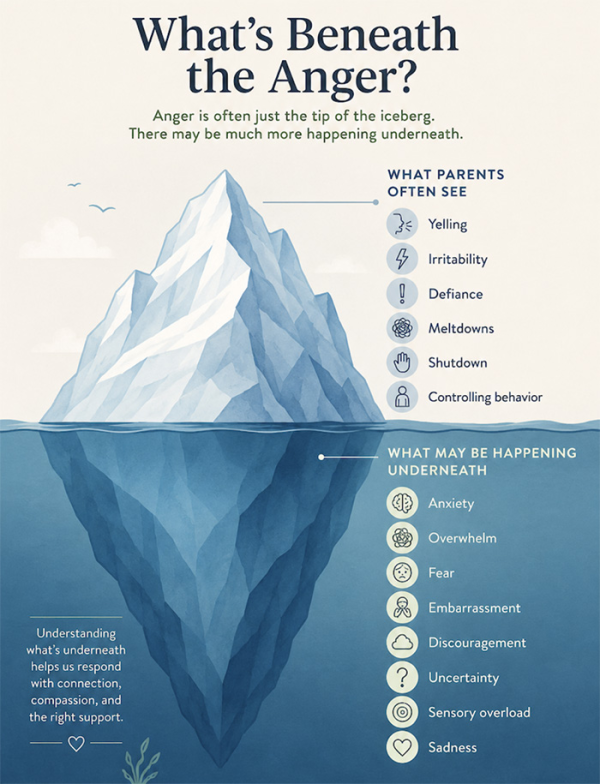
They may describe a child who seems constantly frustrated, easily overwhelmed, or quick to explode over small things. From the outside, it can look like anger, defiance, or disrespect.
But underneath the behavior, something else is often happening.
In many children, anxiety does not look fearful or quiet. Instead, it shows up as irritability, emotional outbursts, avoidance, or anger.
Understanding what may be happening beneath the surface can help parents respond with greater clarity and connection.
Why Anxiety Sometimes Looks Like Anger
When children feel anxious, their nervous system shifts into a stress response.
Their body begins preparing for danger, even if the “danger” is something everyday like:
- a difficult school assignment
- a social situation
- uncertainty or change
- fear of making a mistake
- feeling overwhelmed emotionally
In these moments, children are not calmly thinking through the situation. Their body is reacting first.
For some children, that stress response looks like:
- yelling
- arguing
- refusing
- crying or melting down
- becoming controlling or oppositional
Anger is often the emotion adults notice most easily, but anxiety may be the feeling driving the behavior underneath.
Signs Anxiety May Be Beneath the Anger
Children do not always have the words to explain when they feel nervous, overwhelmed, or emotionally overloaded.
Instead, anxiety may appear through patterns such as:
- big reactions to small problems
- perfectionism or fear of mistakes
- frustration during transitions
- avoiding certain situations
- needing frequent reassurance
- stomachaches or headaches without a clear medical cause
- emotional shutdown after becoming upset
These behaviors are not simply about “bad behavior.” They may reflect a child who is struggling internally and does not yet know how to communicate what they are feeling.
Understanding Behavior as Communication
Many child development approaches emphasize that behavior is often a form of communication.
Adlerian psychology teaches that children are deeply motivated by their need for belonging and significance. When children feel discouraged, overwhelmed, or disconnected, those feelings often appear through behavior rather than words.
A child who becomes angry quickly may actually be experiencing:
- fear of failure
- embarrassment
- uncertainty
- feeling emotionally unsafe
- difficulty tolerating overwhelm
Looking beyond the behavior itself can help parents better understand what their child may truly need in the moment.
What Parents Often Misunderstand
When anger appears, it is natural to focus on stopping the behavior immediately.
However, if anxiety is underneath the reaction, consequences and repeated correction alone may not address the real issue.
This does not mean children should not have limits or accountability. Healthy boundaries remain important.
But children who are emotionally overwhelmed often need help regulating before they can fully process correction or problem-solving.
Connection and emotional safety help children return to a calmer state where learning becomes possible.
What Helps Children at Home
Small shifts in how parents respond can help anxious children feel safer and more capable over time.
Stay Calm During Big Emotions
Children often look to adults to determine whether a situation is safe.
A calm, steady presence communicates:
“You are safe, and we can handle this together.”
This does not mean parents must respond perfectly. It simply means that calm support helps children regulate more effectively than escalating alongside them.
Help Name the Feeling
Children often act out emotions they cannot yet identify.
You might gently say:
- “I wonder if that felt overwhelming.”
- “That seemed really frustrating.”
- “I can see your body is feeling really tense right now.”
Over time, children begin connecting physical sensations and behaviors to emotions.
Support Regulation First
Anxiety is not only emotional. It also affects the body.
Before encouraging problem-solving, it can help to first support regulation through calming strategies such as:
- slow belly breathing
- movement or stretching
- sensory activities
- taking a quiet break together
Helping the nervous system settle makes it easier for children to access coping skills and clearer thinking.
Focus on Small Steps
Children build confidence gradually.
Rather than expecting immediate change, focus on manageable steps that help children experience success while tolerating discomfort.
This might look like:
- walking into school with support before transitioning independently
- trying a new activity for a short period of time
- practicing speaking for themselves in familiar situations
Small experiences of coping successfully help children begin to trust themselves.
When Counseling May Help
If your child’s anger feels frequent, intense, or difficult to manage, counseling may provide additional support.
For younger children, this often happens through play therapy, where children can express emotions, process worries, and practice coping skills in ways that feel natural and developmentally appropriate.
If you would like to learn more about what therapy looks like for children, you may find it helpful to read our article on what happens during a play therapy session.
Supporting Families in Plano, Texas
At Playful Roots Therapy in Plano, Texas, we support children, teens, and families as they navigate anxiety, emotional overwhelm, behavioral challenges, and life transitions.
Through counseling and play therapy, children can better understand their emotions, build resilience, and develop healthier ways of coping and communicating.
Every child deserves support that helps them feel understood beneath the behavior.
Share this story!
How to Get Started
1
Connect with Me
Reach out via my contact form and we’ll set up a time to chat about how I can help you.
2
Initial Meeting
We’ll have a brief phone call to see if we’re a good fit to work together and I’ll answer any questions you may have.
3
Begin Sessions
Start your journey of growth and healing. Sessions are scheduled at a time convenient for your busy schedule.